Company Profile
Caring for the Environment, Caring for the Future
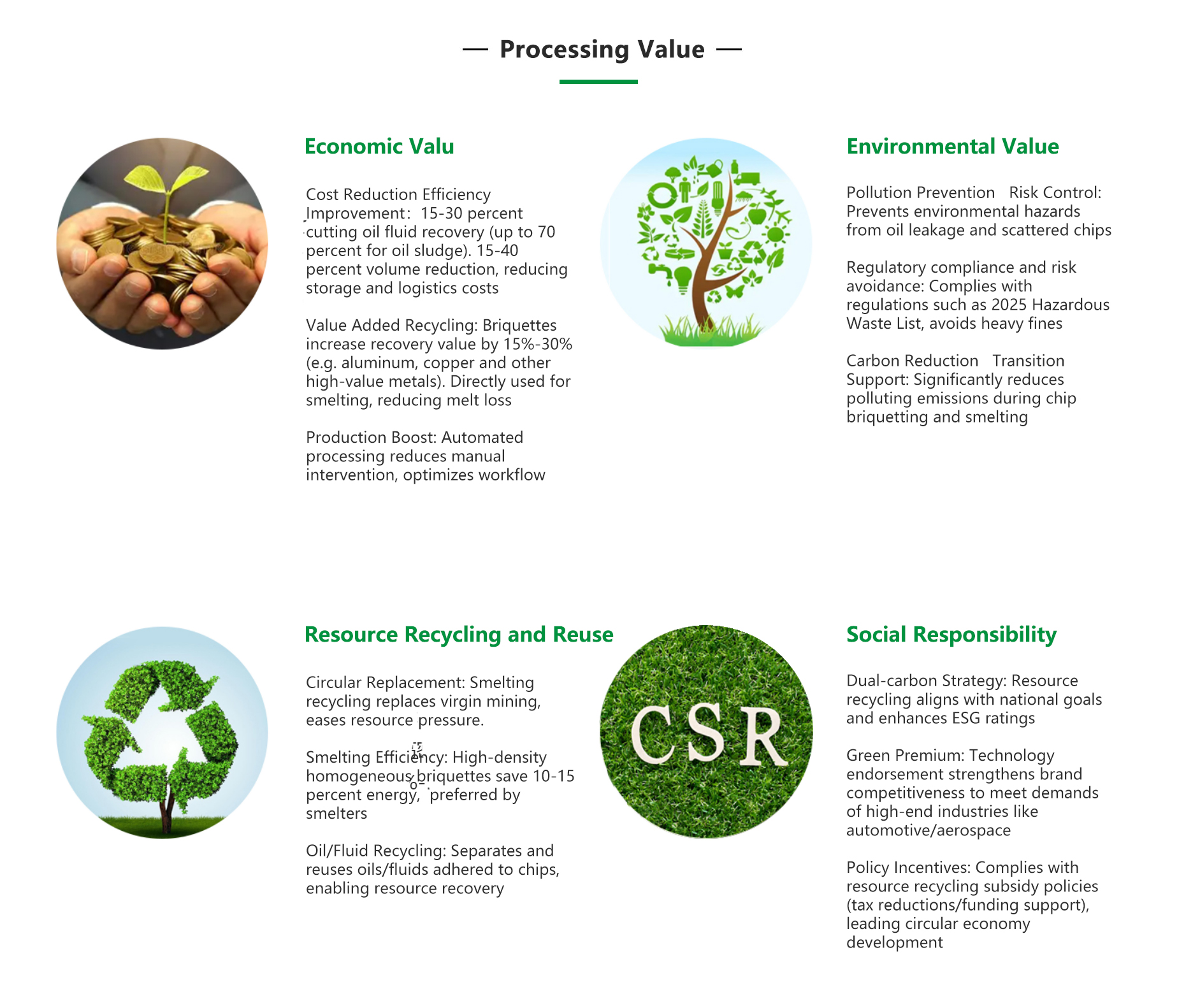
Traditional chip processing suffers from oil leakage and severe secondary pollution. Environmental regulations (such as the "Solid Waste Law" and "Recyclable Resources Recycling Management Measures") impose strict requirements on industrial waste disposal. Random stacking or selling of chips may face heavy fines.
Traditional manual collection, sorting, and packing methods are inefficient, require substantial manpower, and pose safety risks. These methods incur high processing and management costs. Such inefficient handling also impacts production efficiency, causing interruptions due to chip processing during production. This not only increases enterprises' chip processing and management costs but also raises overall production costs, restricting business development.
During machining processes, chips retain significant amounts (15%-30%, with grinding chips reaching over 70%) of cutting fluid or oil, preventing recycling and reducing their resale value. Loose chips occupy large volumes with low density, resulting in high transportation and storage costs (accounting for approximately 15%-30% of total logistics expenses). Traditional chip handling methods lead to weight management difficulties during sales, causing direct economic losses for enterprises.
Fluctuating metal prices drive enterprises to improve resource utilization through efficient recycling, reducing raw material procurement costs. Metal briquettes can be sold directly to smelting units, offering a premium margin of 10%-30%.

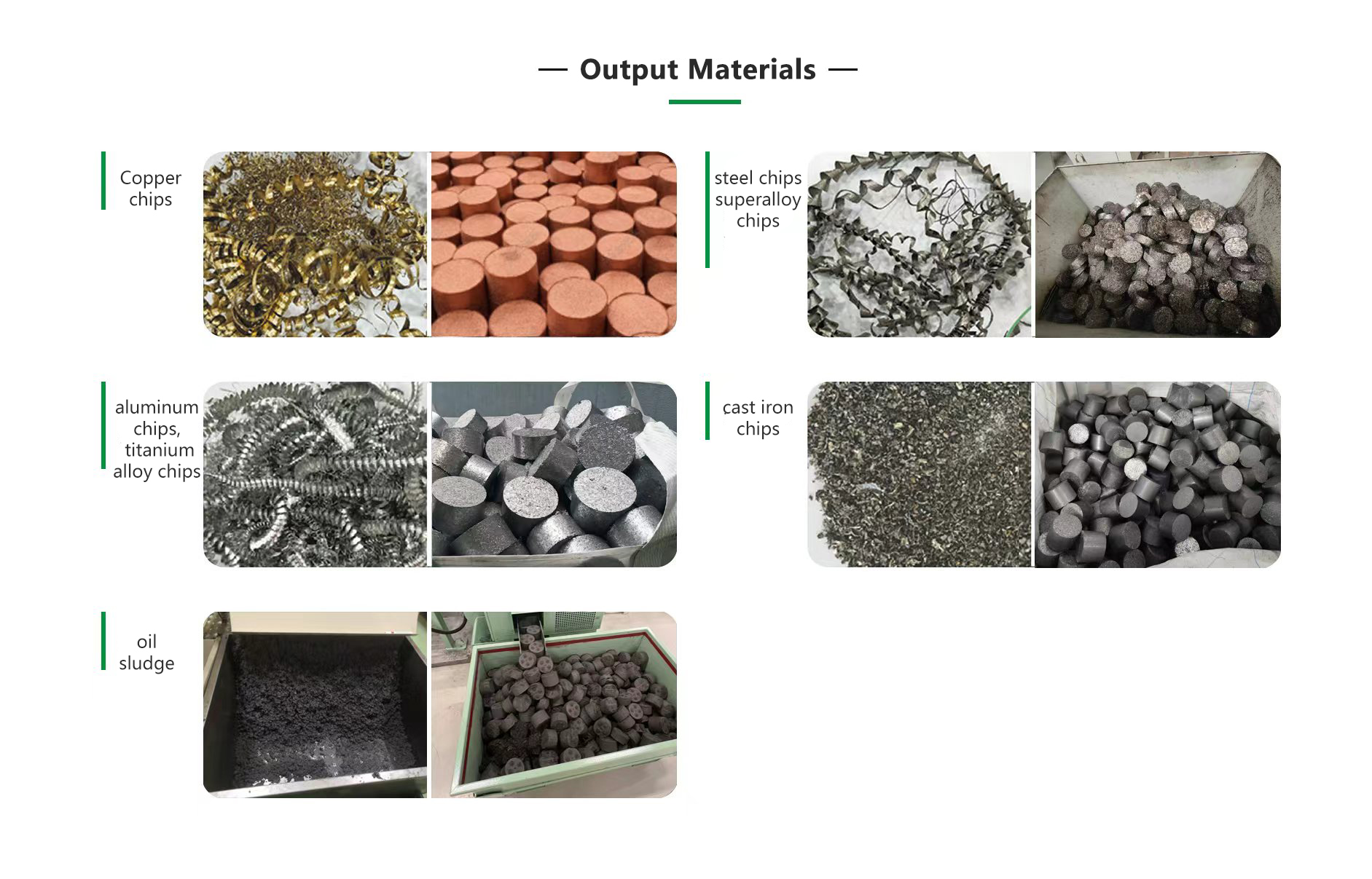
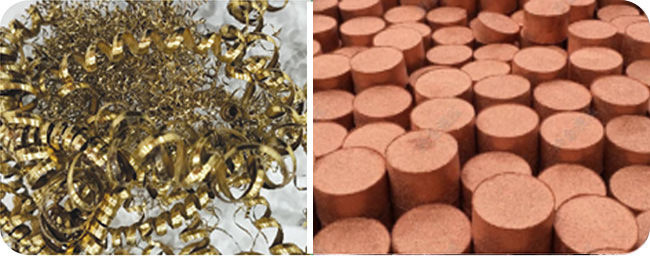
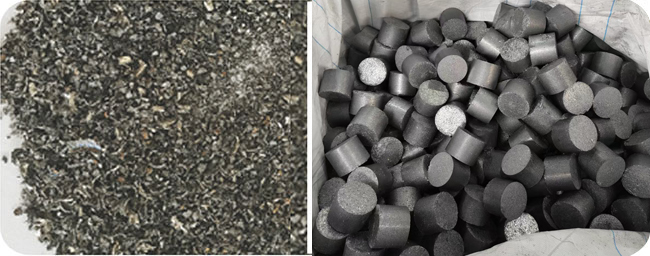
Copper chips
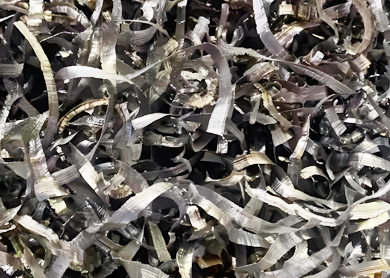
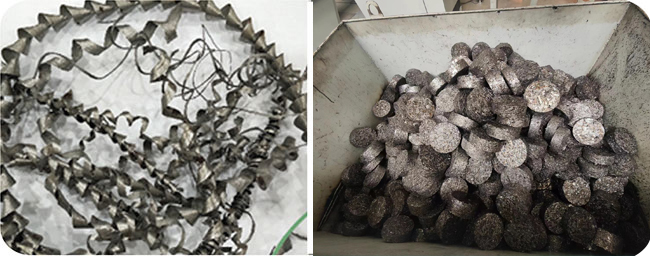
steel chips
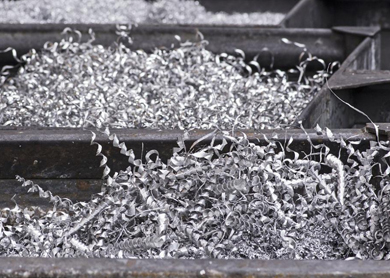
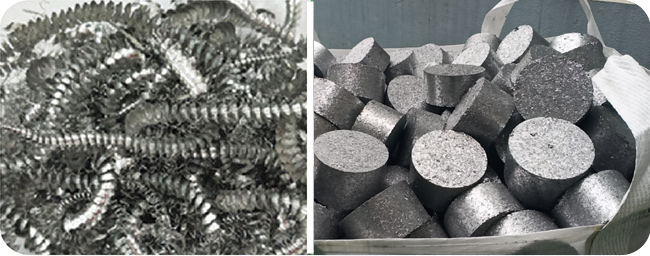
aluminum alloy/titanium alloy
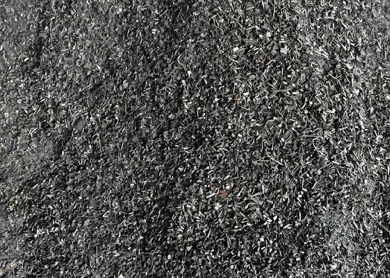
cast iron chips
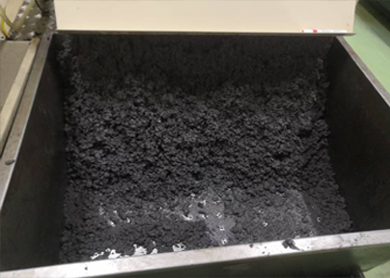
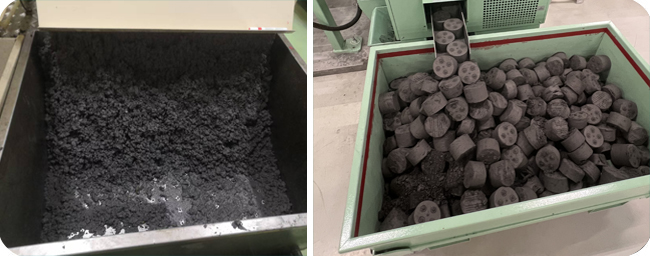
oil sludge

superalloy/ hard alloy